

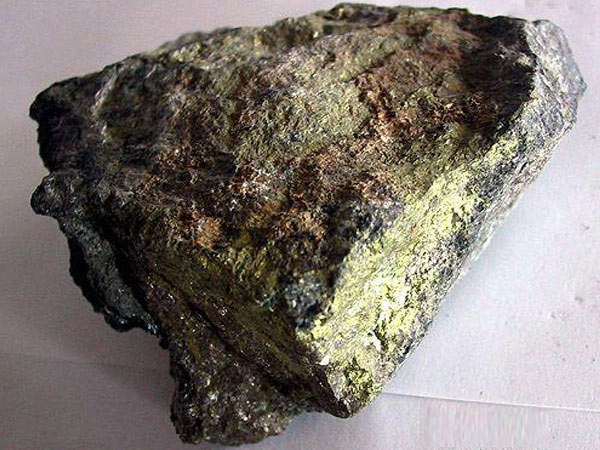
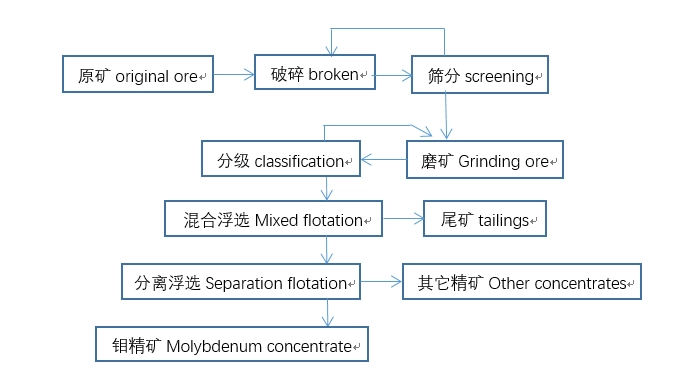
Molybdenum is rarely distributed and relatively concentrated in nature. Currently, there are more than 20 known molybdenum minerals, including molybdenite, molybdenite, molybdenite, and calcium molybdate. These four types of molybdenum minerals are currently of industrial value; Molybdenite accounts for more than 98% of the world’s mining output, and the other three are secondary oxidation minerals of molybdenite. Molybdenum ore beneficiation should prevent over grinding, and the process generally adopts a multi-stage grinding and selection process. The conventional process is: rough grinding produces coarse concentrate, sweeping tailings to recover other metals, and the coarse concentrate is further ground in 2-3 stages and selected multiple times to obtain molybdenum concentrate.
Molybdenum is often produced simultaneously with copper in nature, and copper molybdenum separation is often encountered during the production process. Currently, the commonly used method for copper molybdenum separation is to suppress copper and float molybdenum
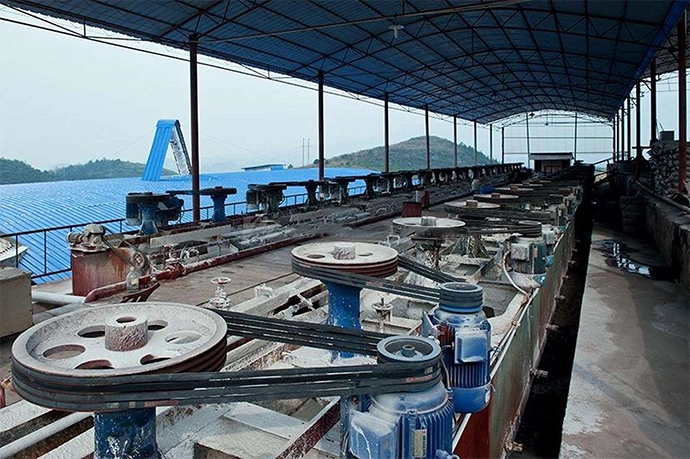
Typical beneficiation plant
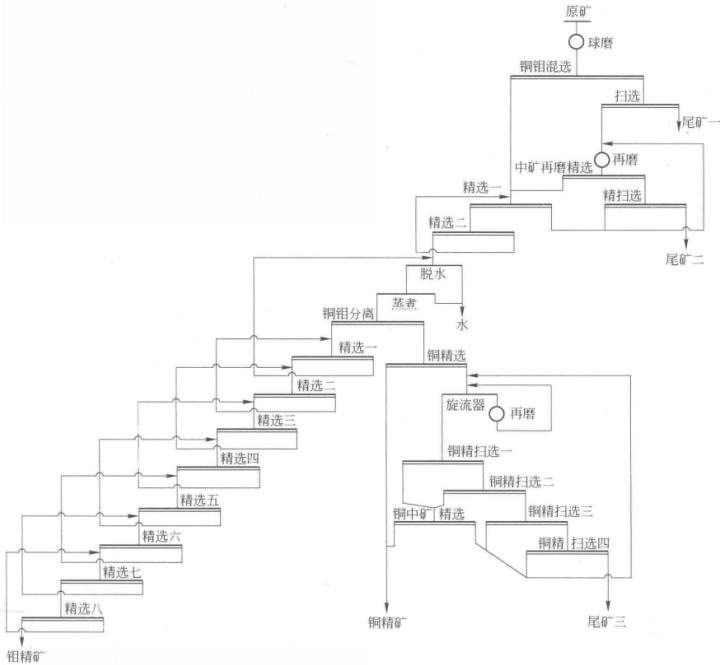
The Erdengte copper molybdenum beneficiation plant is a porphyry type copper molybdenum deposit, with copper molybdenum mineralization in the form of disseminated, vein like, and angular gravel. The metal minerals in the ore are mainly chalcopyrite, chalcopyrite, bornite, molybdenite, etc. The vein minerals are mainly quartz, feldspar, sericite, etc., and also contain a certain amount of oxidized minerals. The specific process is as follows:
- Random article
- Popular articles
- Popular comments
- Copper Ore Flotation and Magnetic Gravity Combined Process
- Tin ore gravity+flotation process
- Iron Ore Roasting and Magnetic Separation Process
- Gold Mine Heap Leaching: Optimal Process
- Lithium ore reverse flotation process
- Understanding the Manganese Ore Flotation Process
- Titanium Ore Processing: Magnetic Separation, Gravity Separation, Flotation

Leave a message with your needs or comments
Add comment: